
A high-quality, well-installed garage door is an investment in your home’s security, safety, energy efficiency and curb appeal. Prioritizing best maintenance practices can help your garage door and opener reach their full life expectancy while minimizing expensive repairs.
The following guide offers basic knowledge of your garage door’s key components, how they work and what tasks you should complete on a consistent maintenance schedule to prolong its life.
What Is the Lifespan of a Garage Door?
Garage doors can last about 30 years with proper installation and regular maintenance. The door’s lifespan can also vary depending on:
- Weather and climate: Each region has its own weather. For example, some areas have harsh wind and hail, while others might have extreme heat in the summer. Each material is vulnerable to different weather conditions. For instance, metal can rust if exposed to moisture for too long.
- Usage: The number of opening and closing cycles a garage door experiences will affect its components’ wear and tear, directly impacting the overall lifespan, so the best way to preserve longevity is to reduce the number of daily cycles. Key components that wear with every cycle are springs, rollers, cables, hinges, bearings and weather seals. Chat with a professional about how many cycles your garage door can do. If you know you tend to use the door often, choose a garage door style that matches your usage.
- Maintenance: Garage doors should be serviced regularly and maintained in between. Do a visual inspection every now and then and especially after harsh weather.
- Quality of door: The higher the quality, the more durable the garage door.
Garage doors often only need a replacement component, such as a spring or a panel, to return them to optimal performance. However, there may be a time when you will need a completely new garage door. Signs like physical damage and increasing energy costs can indicate it’s time for a new garage door.
What Is the Life Expectancy of a Garage Door Opener?
The average life of a garage door opener is about 10 to 15 years, shorter than that of a garage door. This shorter lifespan is because electronic components like logic boards, capacitors, sensors and remotes are sensitive to heat, moisture and power surges, giving them a higher risk of failure. A poorly balanced door can also strain the opener, causing its mechanical parts to accumulate more wear than necessary during each cycle.
Why Maintenance Matters
Keeping your opener and garage door maintained provides better safety, saves money on repairs and leaves less room for an inconvenient emergency. All parts of your garage door and opener will benefit from maintenance. You can reduce friction and wear on moving parts, identify issues early and have peace of mind that your garage door is in good condition.
Essential Garage Door Maintenance Tasks for Michigan Homeowners
You can keep your garage door well-maintained, reliable and long-lasting by performing the following crucial maintenance tasks:
Consult Your Owner’s Manual
Each garage door and opener has its own instruction manual, which contains specific maintenance instructions and a map of where each component and switch is located. If you’re facing any issue, your first action should be to consult your owner’s manual to troubleshoot the problem.
Reading your owner’s manual helps you understand your specific door. If you want to avoid reading the manual, you can also chat with a professional about your door’s maintenance needs. Each style, type, design and brand of garage door is unique.
You can lengthen the usefulness of your garage door by understanding the parts that make up your specific garage door.
Clean the Garage Door Panels
The traditional, classic residential garage door is the raised-panel style. The garage door is broken into sections or panels that follow a track and move into the roof space when it opens. While many of these components should be checked twice annually by a professional, the panels themselves can be looked after by the homeowner.
Keep the panels free of any dirt or grime buildup that might naturally occur. Rinse them with water between seasons. You can research how to clean your garage door panels depending on what your door’s made of, whether wood, steel, aluminum or another material.
Do visual inspections as well to ensure that there are no cracks or damage from harsh conditions or a rogue soccer ball.
Clean the Tracks
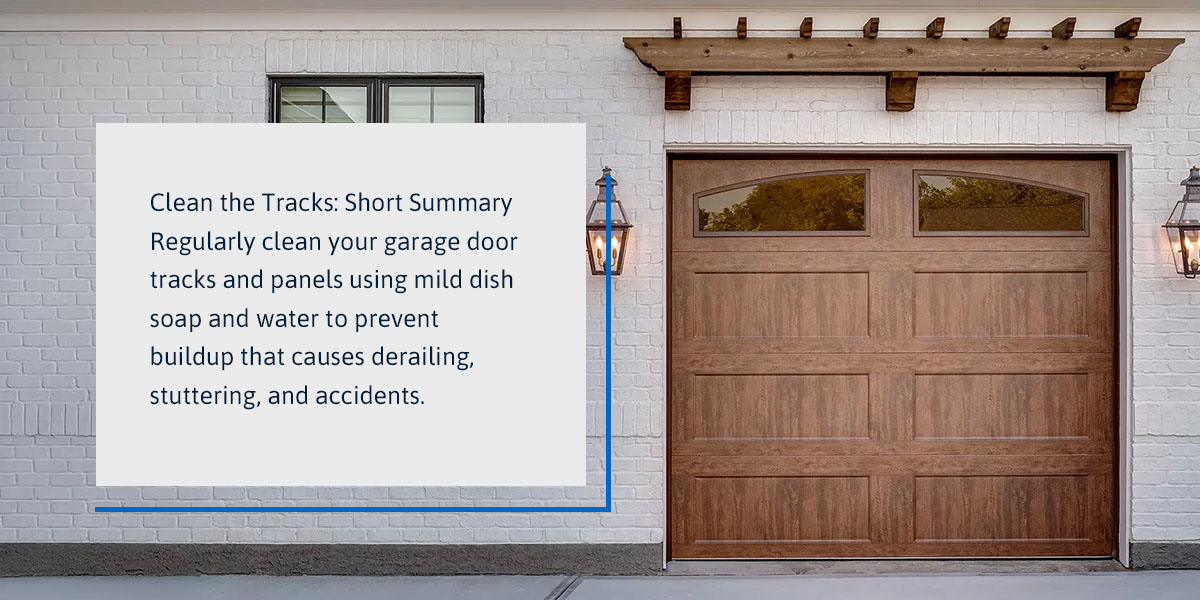
Dust and grime tend to collect in all sorts of places, including your garage door tracks. Keep the tracks clean of any obstacles or grime buildup.
A buildup of dirt or an in-the-way obstacle can cause the tracks to derail or make the door stutter or even get stuck. These can lead to an accident and potentially cause damage to the garage door and anything underneath it.
Keeping your panels and tracks clean will reduce corrosion and friction and preserve your finishes and seals. Ensure the cleaner you’re using is suitable for the material. Avoid solvents, abrasive powders, strong alkalis, bleach and petroleum cleaners. It’s best to clean your panels and tracks with a tablespoon of plain dish soap mixed per gallon of lukewarm water and a sponge or microfiber cloth, rinsing and drying afterwards to prevent rust or swollen wood.
Lubricate Moving Parts Properly
For parts to move smoothly against each other, they need proper lubrication every six months or so for average use, and every three months for heavy use and for extreme weather conditions. Use a lithium-based lubricant for metal-on-metal parts and a silicone-based lubricant for plastic parts. It’s best to consult your user manual first, and if you’re unsure which lubricant is best, call a professional to help.
Before application, cut the power to the opener and close the door. Spray your lubricant on the hinges, springs and circular bearing plates and the armbar at the top of the door. Open and close the door a couple of times to ensure it spreads evenly.
You’ll definitely want to lubricate the springs. The tension springs carry all the garage door’s weight when moving into open and closed positions. They need to be able to do their part and stay flexible. White lithium grease and silicone-based lubricants can help protect the springs from drying and stiffening up.
Here are some more ways you can make your springs last longer:
- Avoid bringing road salt into the garage: Road salt is very similar to table salt and is used to melt ice in cold regions of the United States. Road salt has many potential disadvantages for homeowners, including damaging metal and concrete, contaminating drinking water and harming the groundwater. It can also cause damage to the unprotected parts of your garage door, including the springs.
- Keep your garage door balanced: Service your garage doors at least once a year to ensure the door is balanced. If the door starts to sag on one side, the imbalance will affect the springs, causing wear on at least one of them.
If your springs need to be replaced, your best option is to call a professional.
Test Your Door’s Balance
A balanced garage door prevents damage and increases operational safety. To do a balance test, change the door to manual and unplug the opener. Lift the door by 25% each time, checking to see if it stays put or only moves an inch or two at each height. If the door falls or moves more than an inch or two, it’s unbalanced.
Conduct a side-to-side check when it’s half-open, ensuring the bottom edge is level. If one side hangs lower or twists, you possibly have a spring tension or cable tracking issue.
Wear protective equipment, like steel-tipped shoes, while doing these tests. Do not attempt to adjust springs or cable drums yourself, as they contain a dangerous amount of kinetic energy. If your door is off-balance, call a professional.
Inspect and Test Safety Features
Your garage door features auto-reverse on contact through its photo-eye sensors and an emergency release in case it gets stuck. To test the auto-reverse on contact feature, place a two-by-four board under the door and close it. It should reverse as soon as it touches the board.
To test the sensors, wipe them down with a clean cloth and ensure they’re both lit solidly. Start the door operation and stick a broomstick into the sensor beam. If the sensors are working properly, the door should immediately stop and reverse. To test the emergency release, close the door and pull the red cord down toward the door to disengage the trolley. Lift the door by hand, ensuring it moves smoothly.
Tighten Hardware and Check for Wear
If you hear unusual rattling when you open your door, it may be a loose screw somewhere. You can check the hinge and door arm screws for looseness. However, leave the bottom brackets, lift cables and springs up to the professionals. Call them if you notice rust, broken cable strands or loose parts upon inspection.
Prepare for Michigan’s Seasonal Changes
Conducting essential garage door maintenance tasks will prepare your door for the Michigan winter. If you experience heavy snow, remember to shovel the area in front of the door to prevent it from freezing over. A thin silicone film on the bottom rubber of your weather sealing will reduce sticking.
If you live in a state that experiences harsh weather conditions — such as snow, hail, rain or freezing temperatures — preparing your garage door for winter can lengthen its lifespan. Here are some tips on preparing your garage door for the colder months:
- Do a visual inspection: You will want your door to be in top condition before the cold sets in.
- Check the weatherstripping: A weatherstrip covers the gaps between the edges of your door and the outdoors. Checking the weatherstripping is essential for keeping the cold outside where it belongs.
- Lubricate: Garage doors and motors will take strain during this time. Ensure everything is lubricated so that parts stay flexible and move smoothly.
Garage Door Maintenance Schedule
Ideal maintenance intervals and tasks include:
- Monthly: Test your safety features, inspect and clean debris from tracks, and note any new behaviors or sounds.
- Seasonal: Check for lubrication on hinges and pivots, and make sure everything closes smoothly. Perform a door balance test, as temperature may affect closing.
- Annual: Keep the door clean through a thorough wash, check the weatherstripping’s condition, and inspect the remote and keypad batteries.
When to Call the Professionals
Homeowners can do some garage door maintenance tasks themselves. But larger items, such as garage door replacements, balancing the doors or fixing the motor, should be left to the professionals. You’ll want to service your garage door regularly and receive an inspection twice per year from a professional to keep your door in long-lasting shape.
While inspections, testing and light lubrication help keep you updated on the health of your garage door, it’s safest to contact a professional for preventive maintenance work. At Quality Door Company, we are a Clopay® Master Authorized Dealer®, and we provide expert maintenance services to keep your garage door functional and long-lasting throughout the year in Michigan. We’ve spent decades helping customers in Muskegon, Grand Rapids, South Haven, Holland and beyond.
We’ll adjust the springs, perform all lubrication, check your tracks, tighten hardware and replace worn-out components. Our expert technicians will leave you satisfied and prevent expensive garage door repairs with our affordable maintenance services. Contact us today to schedule an appointment.