
When you think about safety in your home, the garage door might not immediately come to mind. Modern garage doors combine weight, high-tension parts, motors and sensors, all working together to provide smooth operation. But without the right precautions, they can also pose risks. In the U.S., around 35,000 people are injured by a garage door each year.
Understanding garage door safety is about more than avoiding accidents. It’s about protecting your family, safeguarding your property and keeping your door reliable for as long as possible. The good news is that with a little knowledge and proactive care, you can minimize risks and enjoy peace of mind every time your garage door opens and closes.
Key Garage Door Dangers to Recognize
In the USA, garage door openers must be built with certain safety features, such as automatic reversal — but these doors are still complex mechanical systems. By knowing where the hazards are, you’ll be better prepared to use your door responsibly and spot early signs of trouble. Here are some key garage door dangers to keep an eye out for.
High-Tension Springs and Cables
Your garage door system includes heavy-duty torsion springs and cables, which balance the door’s weight so the motor can lift it. The springs are wound under extreme tension. If one breaks or is handled improperly, it can snap with significant force, resulting in severe injury or property damage.
This is why garage door spring replacement and cable adjustments should always be left to trained technicians, even if you’re handy around the house.
Automatic Opener Force
Your garage door opener is designed to move hundreds of pounds smoothly and efficiently. The motorized force required to do so can be dangerous if the door lacks properly functioning safety features.
Modern openers include a safety system that automatically reverses the door if it encounters resistance. If this feature is missing or fails, the door could close on an object — or worse, a person. Testing this system regularly is one of the most important steps in maintaining a safe garage.
Critical Photo Eye Sensors
A garage door system’s photo eye sensors are key to automatic reversal. Mounted near the floor on either side of the door, these sensors send an invisible beam across the doorway. If something interrupts the beam, the door should stop and reverse.
If the sensors are dirty, misaligned or malfunctioning, this safety feature will stop working. Regular checks will help ensure your door stays open when something is in the way.
Common Pinch Points
Garage doors are built with multiple panels that fold along tracks as they open and close. While this design is efficient, it also creates pinch points — areas where fingers or hands can get caught. Children are especially at risk if they play near the door or try to help push it down.
Always keep your hands, clothing and tools away from moving sections of the door. It also helps to make sure kids know not to force the door closed manually.
Essential Garage Door Safety Tips for Your Home
Awareness is the first step of safety, but everyday habits make the biggest difference. You can start using the following garage door safety tips right away.
1. Establish Clear Rules for Children
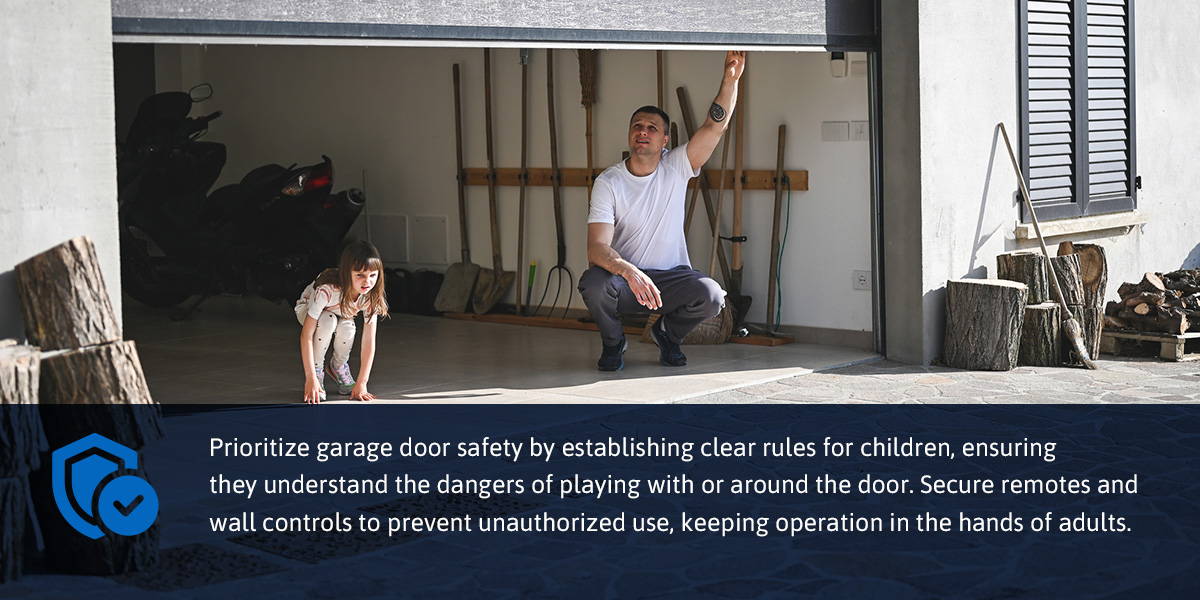
Children should stay clear of the garage door. Make sure they know not to hang on it, race under it while closing or press the controls for fun. Clear rules and safe boundaries help prevent accidents.
2. Secure Remotes and Wall Controls
Garage door operation is best left to adults. Keep handheld remotes out of reach of any children and mount the wall control at least 5 feet from the floor.
3. Maintain a Clear Door Path
When clutter blocks your garage door’s path, it’s more than a nuisance — it’s a safety hazard. Toys, bikes, storage bins or garden tools should be stored away from the door. Keeping the area clear protects the door’s mechanisms and your belongings.
A Quick Inspection Checklist
Paying attention to everyday operation and performing a quick monthly checkup on your garage door is simple. These visual and functional tests can help you spot early warning signs before they turn into a costly or dangerous problem. If you notice something wrong, call a professional rather than attempting to DIY the fix.
1. Test the Reversal Mechanism
Each month, place a paper towel roll or a board flat on the ground where the door would close. Activate the door and watch carefully. It should stop and reverse immediately upon contact. If it doesn’t, schedule a service call immediately.
2. Check the Photo Eye Sensor Alignment
Look at the lights on your sensors. They should be solid and consistent. If they flicker, they may be misaligned. To test further, start closing the door and wave a broomstick or similar object in front of the beam. The door should reverse instantly.
3. Look and Listen During Operation
Sometimes your own senses are your best tools. Watch as the door moves up and down. Look out for signs like jerking, hesitation or uneven appearance. Listen as well — does the door make grinding, squealing or scraping sounds? These could all signal worn parts or an issue with the track.
Know When a Professional Inspection Is Necessary
DIY checks are helpful, but some issues go beyond a homeowner’s safe reach. Trying to fix a major garage door problem yourself can make the situation worse or put you at risk. Call a professional immediately if you notice these signs:
- A broken or frayed-looking spring or cable
- A garage door that’s visibly off-track or crooked
- Failed safety reversal or photo eye sensor tests
- Loud, persistent noises during operation
Knowing when to call for professional help is one of the most important aspects of safety around garage doors.
Ensure Your Home’s Safety With Quality Door Company
Garage doors work quietly in the background of daily life, but they still need to be attended to. A well-maintained garage door protects your car and belongings and plays an important role in your family’s safety.
While monthly checks are valuable, nothing replaces a professional inspection from a trusted team. At Quality Door Company, we take every component of your door seriously — from springs and sensors to openers and tracks. Our technicians are trained to spot issues you may miss and to resolve them safely and efficiently.
If you want peace of mind knowing your door is operating as safely as possible, let us help. Reach out to learn more or schedule a professional garage door service today.